
Client Intake Automation: From Discovery Call to Plan With LinkAngler
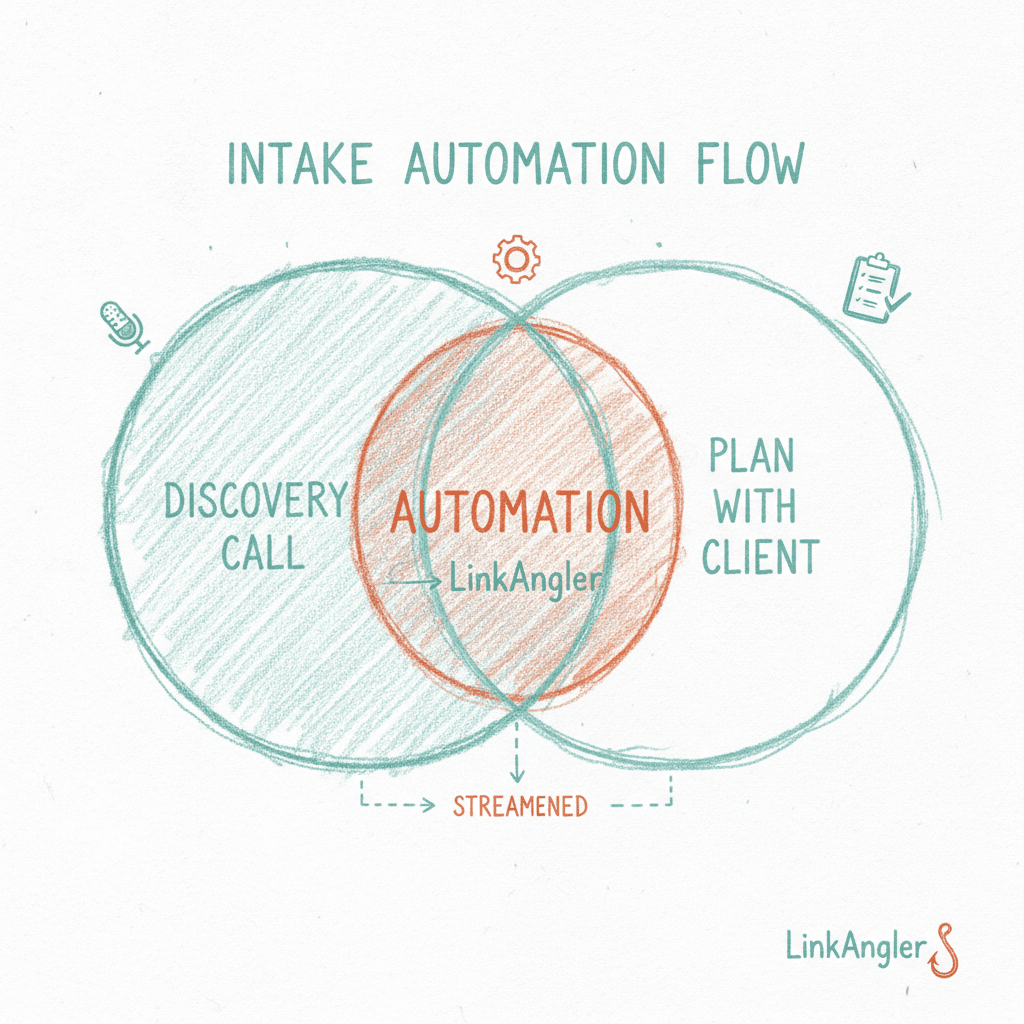
The most expensive hour in your week is the one straight after a discovery call.
The call went well. You promised a follow-up. Now you owe the prospect a recap email, yourself a set of notes, and the file a proper look at their company before you propose anything. Multiply that by every call in a busy week and you have found where your evenings went.
Worse, the follow-up slips. And a warm prospect who waits four days for a recap is a cooler prospect every single day.
This is the first job I automated for client work, and it is now a free guide. Here is the shape of it.
What the automation does
You finish the call. You pick the meeting, and if the call was recorded the transcript pulls in automatically. Then the system goes to work on three things at once:
Research. It looks the prospect up properly: their LinkedIn, their website, the company registries, your CRM. Each source you have connected adds a layer; each one you have not is skipped honestly. It never fakes a fact to fill a gap, which matters more than it sounds, because one invented detail in a follow-up email costs you the deal.
A plan. It drafts an action plan split into two honest halves. Part A is what is proven and quick to build. Part B is what needs research or a compliance check first. Prospects trust a plan that admits the difference.
The recap email. Drafted, sitting in a review queue, with everything cross-checked against what was actually said and found. You edit the To, the Subject, the Body, and nothing sends until you explicitly approve it. The approve button is a one-way gate that cannot double-send.
Client intake automation is not about removing you from the conversation. It is about you turning up to the second call with the research done and the recap already sent while your competitor is still typing notes.
The maths
Say a proper post-call workup takes you 90 minutes and you do four discovery calls a week. That is six hours, every week, on work a machine can draft for your review in the time it takes to make a coffee.
Six hours is not the real number though. The real number is the deals that die in the gap between call and follow-up. If a same-day recap converts even one extra prospect a month, and your average client is worth four figures a month, this single automation outearns your whole software stack. That is the honest way to think about ROI here, and it is the same logic behind what a booked call is actually worth.
Build it yourself, genuinely
The free guide includes the complete prompt to build this in your own stack with Claude Code. Trigger, research adapters, synthesis, quality gate, review gate, all of it. Swap the named tools for the ones you use. Page two, before anything else.
I know the usual move is to gate the how behind a sales call. I would rather you build it. The people who want it done for them know where I am.
The guide also walks through the one-time setup (calendar, transcripts, registries, CRM), the exact inputs that make the output land first time, and the review flow. Download the Intake guide free, alone or with all four automation guides.
Intake is the middle of the machine
One thing worth saying: a perfect intake process only matters if discovery calls are landing in your diary in the first place.
That front half is what LinkAngler itself does. AI lead discovery finds the people who match your ideal customer, starts genuinely personal conversations, and hands interested replies a booking link while they are still keen. Calls come in, intake turns them into plans, plans turn into clients. Each stage feeds the next.
Automate the stage that hurts most first. For most service businesses I speak to, that is this one.