
Sweep Your Whole Client Book in One Go: The LinkAngler Firm Guide
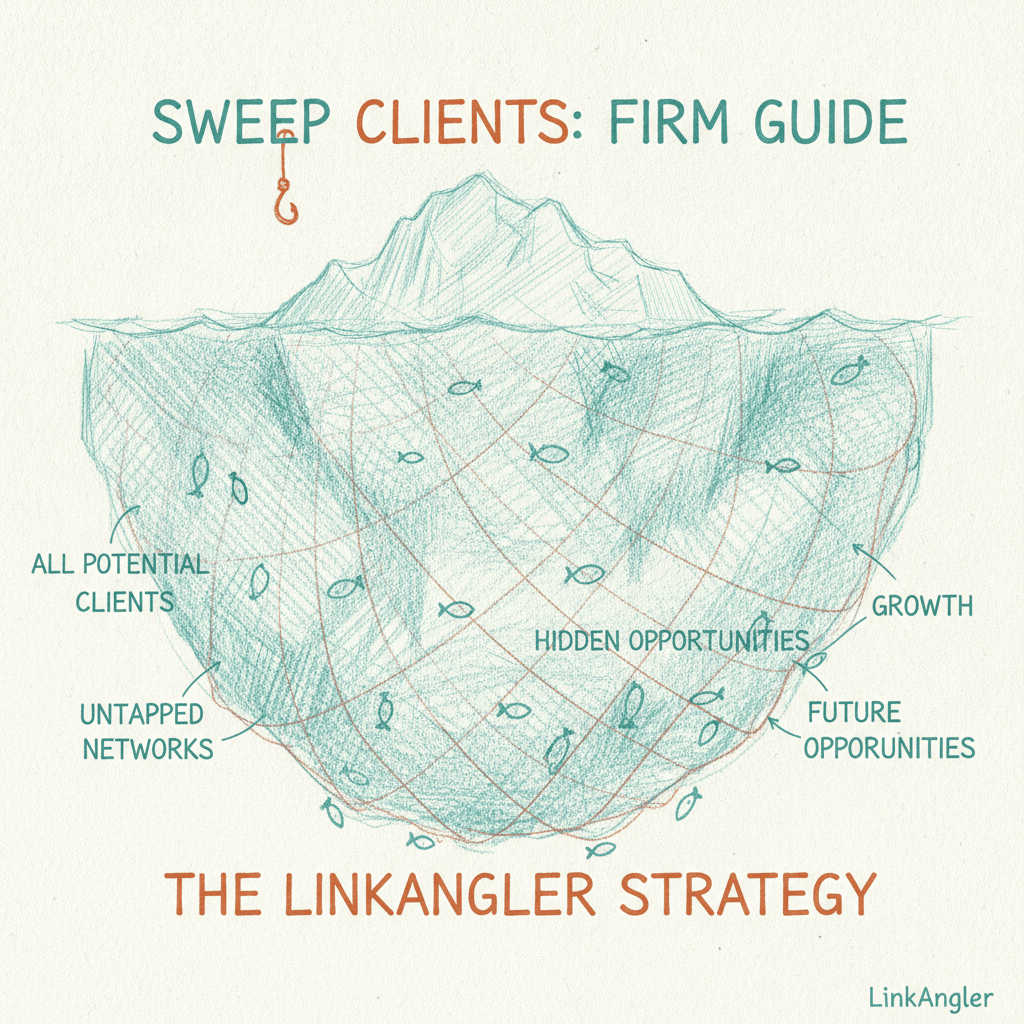
Every firm has the same unadvertised job: keeping on top of the client book.
Who is due a filing. Who has not sent their records. Who needs chasing, who needs a nudge, who quietly went cold. In a ten-person firm that job swallows an hour per person per week. In a small practice it is the partner doing it on Sunday.
Nobody was hired to do it. Everybody does it badly, because humans are terrible at sweeping lists and excellent at the judgement calls buried inside them.
So split the job. That is the whole trick, and it is the fourth of my free automation guides.
The sweep
The automation reads your entire client book in one pass and works out what is due for every single client. Deadlines, missing records, overdue replies, renewals coming up. The stuff a diligent person would catch if they had a full day to check every file, every week.
Then it splits what it finds into two piles:
The obvious. Standard reminders where the right action is not in question. These get drafted as personalised messages, each one written for that client and that deadline, not a mail-merge blast. They queue for approval.
The judgement calls. Anything with ambiguity, sensitivity or money attached gets held for a human, with the context attached so deciding takes seconds. The client who is three reminders deep and has gone silent. The one whose situation changed mid-year. The machine flags; you decide.
That split is the difference between this and every "automated reminder" tool you have tried. Blanket automation treats your best client and your problem client identically. This one knows which pile is which, and it never sends a judgement call on its own.
What it is worth
Take the ten-person firm. An hour per person per week on client chasing is 500 hours a year. At any sensible charge-out rate that is tens of thousands of pounds of capacity spent on checking lists.
But the bigger number is the missed items. One blown deadline costs more than a year of the admin time, in fees, in goodwill, sometimes in liability. A sweep that runs on schedule and forgets nothing is not really an efficiency tool. Transparently, it is insurance that happens to save you time as well.
Chasing prospects works the same way as chasing clients, by the way. The fortune is in the follow-up nobody has time to do. That is exactly what automated campaigns do on the new-business side, and why firms that automate follow-up simply book more calls than firms that rely on someone remembering.
The free guide, build included
The Firm guide is written the same way as the other three: page two is the complete prompt to build the entire system in Claude Code, in your own stack, with your own practice management tools swapped in. Then the setup, the run steps, and the review flow where you approve the queue in one sitting.
Two rules are baked into the build and I would keep them if I were you. Missing data gets skipped honestly, never guessed. And nothing sends without an explicit human approve.
Download the Firm guide free. It sits alongside guides for client intake, session notes and voice-note-to-content, and the four together cover most of the boring hours in a service business.
Start with the sweep you dread
Pick the list you least want to check this week. That is your first automation. Build it from the guide, run it, review the queue, and notice what it feels like to know nothing on that list slipped.
Then do the next list. The hours come back one boring job at a time.