
The Clients You Already Won: Why Warm Pipelines Go Cold and How to Stop It
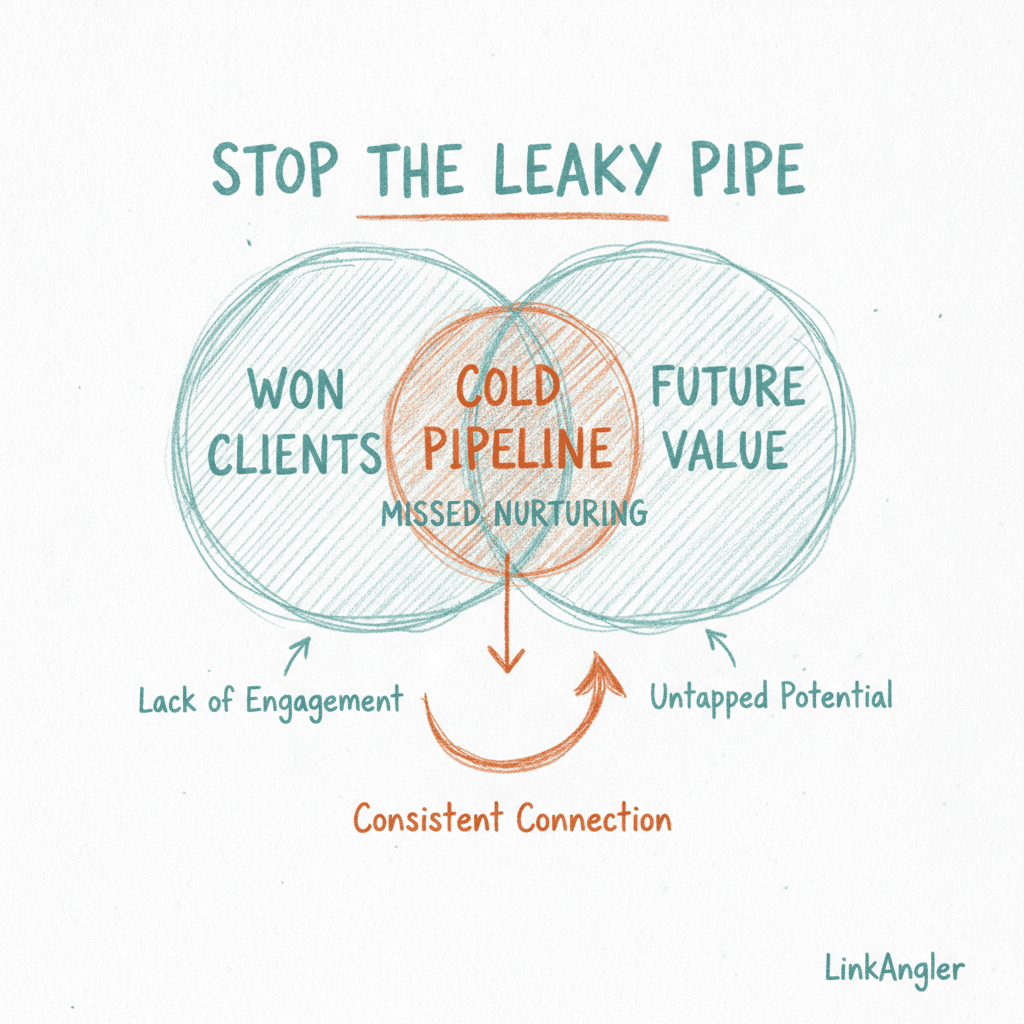
Every coach has a graveyard of almost-clients: the person who replied warmly, asked a good question, said "let me think about it", and then vanished. It is not because they chose someone else, most of the time. It is because life moved on, for them and for you, and nobody restarted the conversation. That promising exchange, full of potential, simply went cold.
The Real Cost of "I'll Follow Up Next Week"
Think about the effort involved in acquiring a warm conversation. It is expensive. It takes content creation, strategic outreach, genuine engagement, and consistent trust-building. Whether you measure that in money spent on ads, networking events, or the sheer hours you pour into your personal brand, it is a significant investment. Letting that lead go cold is like paying for a room in a beautiful hotel and never sleeping in it. You have already bought the opportunity.
Yet, effective follow-up is often the first thing to slip when client delivery gets busy. Your focus naturally shifts to serving existing clients, which is crucial. But this means your pipeline of potential new clients, the future of your business, suffers. Why? Because follow-up usually lives in your head, and your head is already full of calls, sessions, marketing ideas, and administrative tasks. The mental load of remembering who to contact, when, and with what message, becomes overwhelming.
Consider the compounding effect of this oversight. Each "almost client" represents lost potential revenue. More than that, it represents a missed opportunity to help someone who was clearly interested in what you offer. If your typical client engagement is worth, say, a few thousand pounds, then every 10 warm conversations that go nowhere is a significant dent in your bottom line. This is not about being pushy; it is about reclaiming the value you have already created. Without a solid system for warm lead follow-up, you are constantly refilling a leaky bucket, instead of nurturing the flow you have already generated.
What One Coach Recovered
I saw this exact scenario play out with a coach I work with. She was brilliant at connecting with people, generating interest, and having insightful initial conversations. Her pipeline was always full of warm, interested people, but they were slowly going quiet. She was experiencing the classic problem: great at the initial spark, but inconsistent in keeping the flame alive.
We focused on making her nurture process consistent and automatic. The goal was to ensure every open conversation received a thoughtful continuation at the right moment, delivered in her authentic voice, without her having to remember a single person. We built a system that tracked the conversations and prompted the next logical step, always centred on providing value, not just "checking in."
The results were stark. From the same lead pool, with the same offer, she booked 40% more discovery calls. Think about that for a moment. No new marketing spend. No new audience acquisition efforts. She did not have to write new content or spend more time networking. The revenue she generated was already sitting in her pipeline. It just needed consistent, systematic follow-through. By fixing her warm lead follow-up, she grew purely from relationships she already had. The work that got those conversations started finally paid off.
Follow-Through Is Not Pestering
This is a critical distinction that often holds coaches back. The reason many coaches avoid follow-up is that it feels like nagging. Phrases like "just checking in" or "circling back" have earned their bad reputation for a reason. They offer no real value and often feel like a transparent attempt to push a sale. This is not the type of warm lead follow-up that works.
The alternative is continuation. Instead of a generic reminder, you pick up the thread of the actual conversation you were having. This requires remembering what was discussed, what challenges were mentioned, or what specific interests the prospect expressed. For example, if someone engaged with one of your pieces about burnout, and that was the last topic of discussion, the next touch should carry that thread forward. This could be:
- A related thought or insight: "I was reflecting on our conversation about burnout the other day, and something came across my desk that made me think of where you were with the team."
- A new question: "Following up on our chat about building resilience, what's one immediate shift you've considered to protect your energy this week?"
- Something genuinely useful: "Given your interest in sustainable productivity, I just published a short guide on my website. No pressure to read it, but I thought you might find it helpful."
Done this way, follow-through reads as attentiveness and genuine care, not pressure. It demonstrates that you were listening, that you understood their situation, and that you continue to think about how you might help, even if they are not ready to commit immediately. This builds trust and positions you as a helpful resource, rather than just another salesperson. It keeps the relationship alive and warm, ready for when they are truly ready.
Moreover, good follow-through is often the key differentiator. Many coaches are great at the initial conversation. Far fewer are excellent at long-term, value-driven warm lead follow-up. This consistency is what separates the coaches who see their pipeline convert from those who constantly chase new leads.
Three Moves to Make This Week
If you recognise yourself in this scenario, do not despair. You can start turning this around immediately. Here are three concrete steps to implement this week to revive your warm pipeline and improve your follow-up process.
1. List Your "Almost Clients"
First, take an honest look at your recent interactions. List every warm conversation from the last 90 days that simply stopped. These are the people who:
- Replied positively to your outreach.
- Had a discovery call but did not move forward immediately.
- Asked insightful questions about your services.
- Expressed a clear problem that you solve.
- Said, "let me think about it," or "the timing isn't quite right."
- Engaged deeply on a recent social media post or email.
Most coaches find ten or more such conversations. Do not filter. Just get them all down. For each person, note down:
- When you last spoke or connected.
- The main topic of discussion.
- Any specific challenges or goals they shared.
- The last action they took (e.g., asked for pricing, downloaded a resource).
This list is your immediate opportunity. It represents clients you have already invested in, and who have already shown interest.
2. Restart Three Conversations Today with Continuation
Second, choose three people from that list and restart the conversation today. The key is to use continuation, not a generic check-in. This is crucial for effective warm lead follow-up.
Here is how to approach it:
- Reference where the conversation left off: Start by reminding them of your last interaction. "I was thinking about our chat a few weeks back regarding X..." helps re-establish context.
- Add something of value: This is the non-negotiable part. Share a relevant article you read, an insight you had, a quick tip, a useful resource, or a question that sparks further thought related to their challenge.
- Bad example: "Just checking in to see if you're still interested in my coaching." (zero value)
- Good example (if they discussed time management): "I was reading an interesting article on deep work this morning and it reminded me of our conversation about carving out focused time. The bit about protecting the first two hours of the day struck me as something you could actually do. Have you experimented with anything similar?"
- Make it easy to reply: End with an open-ended question that encourages a low-effort reply. Do not ask for a call immediately. Your goal is to re-engage, not to close. "No worries if now isn't the right time, but I was curious about your take on that idea."
This approach demonstrates that you value their time and their specific situation, rather than just pushing your agenda. It transforms a potentially awkward follow-up into a helpful, relevant touchpoint. You are giving, not asking.
3. Systematise Your Follow-Through Beyond Memory
Third, and perhaps most importantly, decide how follow-through will happen consistently without relying on your memory. This is where most coaches stumble. Your brain is brilliant for strategy, creativity, and client sessions, but terrible for repetitive administrative tasks and remembering specific follow-up dates for dozens of people.
Here are a few options, in ascending order of automation and impact on your time:
- Physical System: A simple, old-school method is a dedicated notebook or physical card system. Each card or page is for one warm lead. After every interaction, you write down the next agreed-upon action and date. You physically flip through this every morning. This is manual but can work for a small number of leads if you are highly disciplined.
- Digital Reminders/CRM Lite: Use your calendar or a simple task manager (like Todoist, Trello, Asana) to set specific reminders. After a call, immediately create a task:
Follow up with [Name] about [Topic] on [Date]. Include notes within the task on what to say. This is better than memory but still relies on you creating and checking these reminders manually. - Virtual Assistant (VA): If you have a VA, empower them with a clear process for follow-up. Provide them with templates and guidelines for what makes a "continuation" email, notes from your conversations, and clear instructions on what constitutes a warm lead. They can draft messages for your review or even send them directly once you trust their judgment.
- Automation Platform: This is where the hours actually come back. Tools designed for proactive engagement (which is what I built LinkAngler to do) can automate the tracking, scheduling, and even drafting of these continuation messages.
- You can set up sequences that trigger based on lead status (e.g., "discussed coaching, said let me think").
- The system can prompt you to review a drafted message based on your previous interaction notes.
- Nobody falls through the cracks, because the remembering is not your job any more. Transparently, this is the whole reason LinkAngler exists. My old setup cost me hundreds of pounds a month and still left me doing every check by hand, and the real problem was that follow-up lived in my head rather than anywhere I could trust. Campaign automation fixes the remembering; you still write the judgement calls.
The clients you want next quarter are mostly people you have already met. They are sitting in your "almost-clients" list, waiting for you to restart the conversation. The question is only whether that conversation is still alive and pertinent when they are truly ready to take the next step. By implementing a systematic approach to warm lead follow-up, you can ensure your pipeline remains vibrant, converting interested prospects into valuable clients. This frees you up to focus on what you do best: coaching.