
The Quiet Saboteurs of Your LinkedIn Prospecting: How LinkAngler Turns Them Off
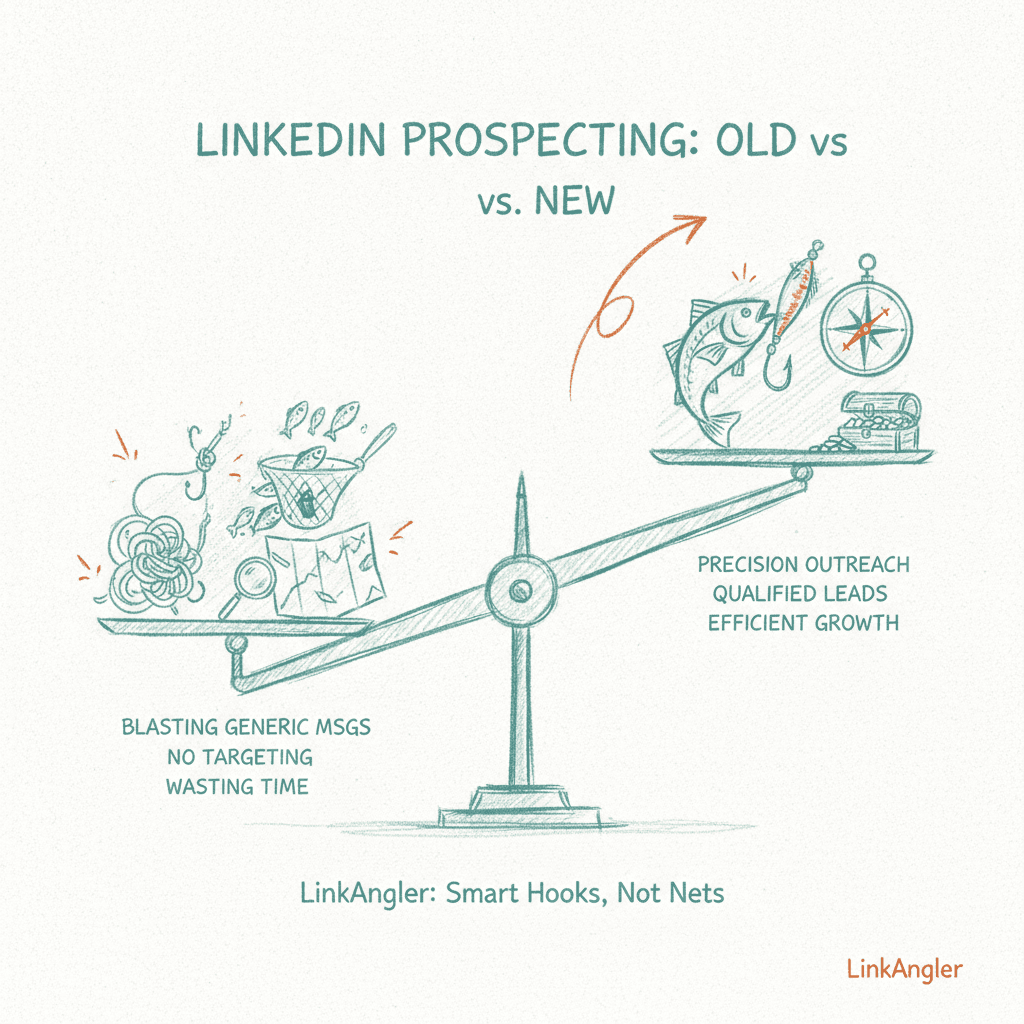
When I started LinkAngler, it was out of pure frustration. I was spending a good chunk of change every month on tools that promised to make my life easier, but often just added more work. Worse, they made it look easy. The truth is, LinkedIn prospecting has a lot of hidden traps. These aren't always obvious. They don't scream "mistake". Instead, they quietly drain your time, ruin your reputation, and most importantly, stop you from booking calls.
I built LinkAngler to turn off these quiet saboteurs. Not just with features, but with a fundamental shift in how you approach connecting with people on LinkedIn. My goal was always simple: design a business that gives me my mornings to surf and my afternoons to build, and that means building a product that gives you your time back too. And if that means dealing with the tedious parts of LinkedIn prospecting so you don't have to, then that's what it does.
Let's dig into some of these common, silent killers of effective LinkedIn prospecting. And how you can just switch them off.
Mistake 1: Casting a Net Too Wide, Catching Nothing
One of the biggest mistakes people make with LinkedIn prospecting is thinking quantity over quality. They connect with anyone and everyone, hoping something sticks. This isn't just inefficient; it's damaging. You end up with a network full of irrelevant contacts, dilute your message, and waste precious time sifting through noise. It's like trying to find a specific grain of sand on a beach.
The Problem with Spray and Pray
When you send generic messages to a broad audience, a few things happen:
- Low Conversion: Your response rates plummet. People recognise impersonal outreach a mile away.
- Wasted Effort: You spend hours writing messages that don't land. You spend more hours trying to follow up with people who were never a good fit.
- Reputation Risk: If too many people mark your messages as spam, LinkedIn notices. This can hurt your account's visibility and even lead to restrictions.
The Fix: Precision Targeting with AI
Imagine if you could only talk to people who genuinely need what you offer. People who fit your ideal client profile (ICP) perfectly. That's the difference between a wide net and a sniper rifle.
LinkAngler doesn't just scrape names; it uses AI to find your ideal customers. It looks at job titles, industry, company size, recent activity, and even specific keywords in their profiles to build a list of prospects who are genuinely likely to be interested. This isn't just about filtering; it's about understanding intent. This precision means that when a message goes out, it's going to someone who should be hearing it. You aren't just sending messages; you're starting conversations with the right people, so qualified prospects book time with you.
This also means fewer connections marked as "I don't know this person" and more genuine engagement. Your LinkedIn prospecting becomes respectful, targeted, and far more effective.
Mistake 2: Sounds Like a Robot, Gets Ignored Like One
We've all received those LinkedIn messages. The ones that start with "Hi [First Name]," and then launch into a sales pitch that could have been sent to literally anyone. They're bland, they're generic, and they get deleted without a second thought. This is the second quiet saboteur: impersonal messaging.
The Trap of Generic Templates
Relying solely on rigid templates is a common pitfall. While templates can save time, they often strip away the human element. Prospects can tell when a message hasn't been written specifically for them. This creates a psychological barrier. It tells them you haven't taken the time to understand their needs. Why should they give you their time?
The Fix: Personalisation That Books Calls
True personalisation goes beyond inserting a name. It's about demonstrating that you've done your homework. It's about showing you understand their world, their challenges, and how you might genuinely help.
I refuse to fully automate certain things on principle. AI comments on other people's posts, for example, never sound human. That's why LinkAngler has an automatic quality gate. This isn't about letting AI write everything and hoping for the best. It's about using AI to assist with genuinely personal messages, ensuring nothing goes out that sounds like a robot. The quality gate scores every message before it sends, making sure it passes the "human review" test.
This means your messages are genuinely personal, not just templates. They resonate. They spark curiosity. They lead to replies. This is how you move from being ignored to actually booking calls. You can even use your best content, working in outreach. An Article Library lets campaigns share your genuinely useful articles with the right prospect at the right moment, give-first instead of pitch-first. This builds trust and demonstrates expertise before you even ask for a meeting.
Mistake 3: The Black Hole of Follow-Up
You send a connection request. It gets accepted. You send an introductory message. No reply. Then what? For many, this is where the trail goes cold. They send a single follow-up, maybe two, then move on. This is a huge mistake. Most deals aren't closed on the first touch. Effective LinkedIn prospecting requires persistence, but smart persistence.
The Cost of Inconsistent Follow-Up
- Missed Opportunities: Many prospects are busy. They might see your message, intend to reply, and then get sidetracked. A well-timed follow-up can catch them at the right moment.
- Lack of Persistence: Giving up too soon signals a lack of commitment. It shows you're not serious about helping them.
- Manual Overload: If you're trying to manually track who you've messaged, when, and what their response was, it quickly becomes an impossible task. You spend more time managing your spreadsheet than actually engaging with prospects.
The Fix: Automated, Intelligent Follow-Ups
LinkAngler is built around the idea that your calendar should fill itself. It's not just about sending an initial message; it's about nurturing the conversation.
Our campaign automation handles discovery, messaging, replies, and follow-up. It runs on autopilot instead of eating your day. This means that if a prospect doesn't reply to your first message, they'll receive a thoughtfully crafted follow-up message a few days later, designed to re-engage them. And if they still don't reply, a different angle will be presented later on. These aren't just generic reminders. They are varied, value-driven messages that keep the conversation alive without being pushy. This is how results compound. Messaging auto-improves over time and cold leads come back with fresh angles, so the pipeline keeps growing.
Even better, interested replies get a booking link while the prospect is still keen. This means you wake up to meetings, not a backlog. Warm leads are handled in minutes. No more chasing replies or playing email tag.
Mistake 4: Living on LinkedIn, Draining Your Energy
How many hours do you spend on LinkedIn each week? Scrolling through feeds, checking profiles, sending messages, replying to comments? For many business owners and sales professionals, it's a significant chunk of their day. This time isn't just lost; it's time you could be spending on high-value tasks, or even just living your life. This manual drain is a silent killer of productivity and growth.
The Energy Sink of Constant Manual Engagement
- Opportunity Cost: Every hour spent manually prospecting on LinkedIn is an hour not spent closing deals, improving your product, or spending with family.
- Burnout: Constant digital presence can be exhausting. The pressure to always be "on" leads to burnout and decreased effectiveness.
- Inconsistency: It's hard to maintain consistent outreach efforts when you're doing everything by hand. Life gets in the way.
The Fix: Automated Engagement That Keeps You Visible
I designed LinkAngler around a 10-hour work week. The product is that philosophy shipped. My framing is "10 hours to 10 seconds": take anything a business does that eats 10 hours a week and get it done in the time it takes to press a button.
This extends to staying visible without living on LinkedIn. LinkAngler's engagement lists keep you liking and commenting on the right people's posts on a schedule, in your voice, with the same quality gate I mentioned earlier. This means your network sees you, you stay top of mind, and you build goodwill, all without constantly being glued to your screen. You get hours back every week. Discovery, messaging, replies, and follow-up run on autopilot instead of eating your day.
Imagine having a full calendar of booked calls without the constant grind of manual LinkedIn prospecting. That's the promise. That's what LinkAngler delivers.
Mistake 5: Ignoring Deliverability, Landing in Spam
This is a technical one, but it's crucial. When you're sending out a lot of messages or emails, whether through LinkedIn or directly, you run the risk of getting flagged as spam. If your messages don't land in the inbox, they don't get read. If they don't get read, you don't book calls. It's that simple. And many tools out there don't properly address this, leaving you vulnerable.
The Hidden Trap of Poor Sender Reputation
- Messages Unseen: If your messages land in the spam folder, your entire LinkedIn prospecting effort is wasted.
- Account Restrictions: Repeatedly being flagged as spam can lead to temporary or even permanent restrictions on your LinkedIn account or email provider.
- Wasted Investment: You're paying for tools and spending time on outreach that never reaches its destination.
The Fix: Outreach That Scales Safely
I've tested every automation on my own accounts first. I know what works and what gets you into trouble. Outreach that scales safely is non-negotiable.
LinkAngler addresses this head-on. Our multi-mailbox rotation and warm-up protect your sender reputation, so volume goes up without deliverability going down. This isn't just a fancy feature; it's critical infrastructure for any serious LinkedIn prospecting effort. It means your emails actually land in the inbox, so more of them turn into replies and booked calls. You can increase your outreach volume confidently, knowing that your messages are getting through to the people who need to see them.
Mistake 6: No Clear ROI, Just "Activity"
Many businesses track activity metrics (messages sent, connections made) but fail to connect these directly to revenue. They're busy, but are they busy doing the right things? If you can't trace your LinkedIn prospecting efforts back to booked calls and closed deals, you're flying blind.
The Danger of Unmeasured Efforts
- Misallocated Resources: You might be pouring time and money into activities that aren't generating results.
- Lack of Optimisation: Without clear data, you can't identify what's working and what's not, making it impossible to improve.
- Frustration: If you're working hard but not seeing the tangible outcomes, it leads to frustration and questioning the value of your efforts.
The Fix: Connecting Activity Directly to Booked Calls
LinkAngler's primary goal is to fill your calendar with booked calls. Not just activity. We want you to see the direct line from the outreach to the meeting.
If just one booked call becomes a 1,000-pound-plus per month client, the spend has paid for itself many times over. This is the ROI you should be looking for. LinkAngler helps you achieve this by providing clear analytics, showing you which campaigns, messages, and approaches are leading to the most booked meetings. It's about results that compound.
You can use a free tool like our [/time-audit] calculator to see exactly how many hours a week your current process burns and what that costs you. This helps you quantify the benefit of automating these tasks. It brings real numbers to the table, showing you the tangible impact on your bottom line.
Turning Off the Saboteurs and Turning On Your Sales Pipeline
The common mistakes in LinkedIn prospecting aren't always glaring errors. They are often subtle inefficiencies, a lack of personalisation, or simply too much manual effort. These quiet saboteurs eat away at your time and prevent you from booking the calls you need to grow your business.
I built LinkAngler to tackle these head-on. It's about more replies, less spam. It's about a calendar that fills itself. It's about giving you hours back every week.
It's not about complex features; it's about the outcome. More booked meetings, more pipeline, more revenue, and critically, more of your own precious time back.
Stop making these quiet mistakes. Let LinkAngler switch them off for you. Your calendar will thank you. If you're looking for whole-business automation beyond outreach, I've put together some free guides at [/downloads] covering client intake, session notes, turning a voice note into content, and sweeping your entire client book for what's due. Each guide includes the exact prompt to build the automation yourself. Nothing gated, just practical tools to give you more of your time back.